Featured Testimonial About Creighton University

The Creighton Law School faculty and staff and bar-exam-focused curriculum was the best preparation for handling the rapidly shifting legal landscape.
Young lawyers cut their teeth reviewing thousands of emails, redlining contracts and drafting documents late into the night.
That’s about to change, thanks to the new generation of artificial intelligence — large language models like Claude, ChatGPT and Gemini — according to Sean Nakamoto, JD’17, associate corporate counsel at Google DeepMind.
Google DeepMind, as the Creighton School of Law graduate describes it, is a research-focused lab that tackles AI from every angle, including sourcing and organizing data, training models and testing to ensure systems are reliable and safe. The goal of this work is to drive advancements toward Artificial General Intelligence (AGI), a next generation concept of AI that could meet or surpass human abilities.
Suffice it to say, he knows a little about the future of AI and how it impacts work.
While AI can accelerate the delivery of legal services by identifying patterns or retrieving information, human oversight and critical thinking remains essential to ensure accuracy and to navigate the highly nuanced, context-specific requirements of legal work.
— Sean Nakamoto, JD’17
Because tasks like discovery review and redlining contracts “help transform law students into practicing lawyers,” Nakamoto says, there could be a shift in the training and development of how law students are taught and how recent law school graduates will practice.
He emphasizes, though, that AI will remain an assistant or tool rather than a human replacement.
More to that point, he says, AI and humans can create the best outcomes by pairing their skillsets: “While AI can accelerate the delivery of legal services by identifying patterns or retrieving information, human oversight and critical thinking remains essential to ensure accuracy and to navigate the highly nuanced, context-specific requirements of legal work."
The perfect example of humans and AI working together is Nakamoto's work in the lab, in collaboration with the product teams that are actually building Google’s foundational AI model, Gemini.
He uses his highly refined, strategic skill set to provide counseling on legal issues, including intellectual property, privacy, domestic and international law, and regulation compliance for data-intake processes.
Without responsible implementation and real-world practice, Nakamoto says, ethical risks increase. The American Bar Association has emphasized that attorneys must remain competent in their use of AI tools, safeguard client confidentiality and maintain candor with the courts when AI-generated content is involved.
AI is not a substitute for a lawyer's judgment, Nakamoto cautions. When lawyers rely on it as a crutch or replacement, they often become cautionary tales.
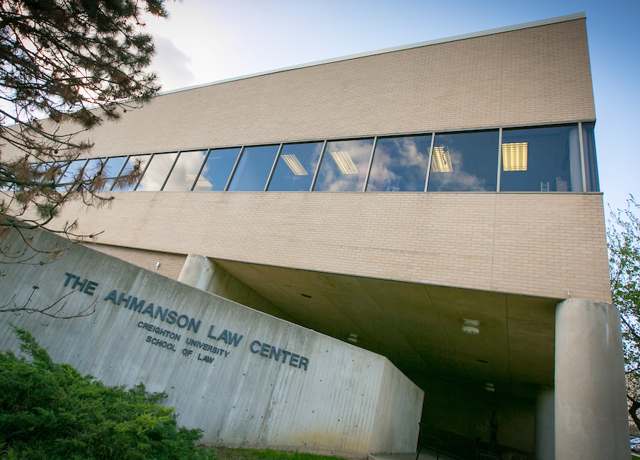
He says his Creighton Law education was paramount in his ability to successfully and ethically adapt to the world of AI.
“The Creighton Law School faculty and staff and bar-exam-focused curriculum was the best preparation for handling the rapidly shifting legal landscape,” Nakamoto says. “The curriculum's focus on the fundamentals of law created a strong foundation of knowledge that is anchored in core substantive legal areas,” helping him analyze the influx of new laws and regulations targeting technologies like AI.
AI may change how lawyers practice, Nakamoto reflects, but the core of the profession, including thoughtful analysis, sound judgment and a responsibility to serve the greater good, remains the same.