Featured Testimonial About Creighton University
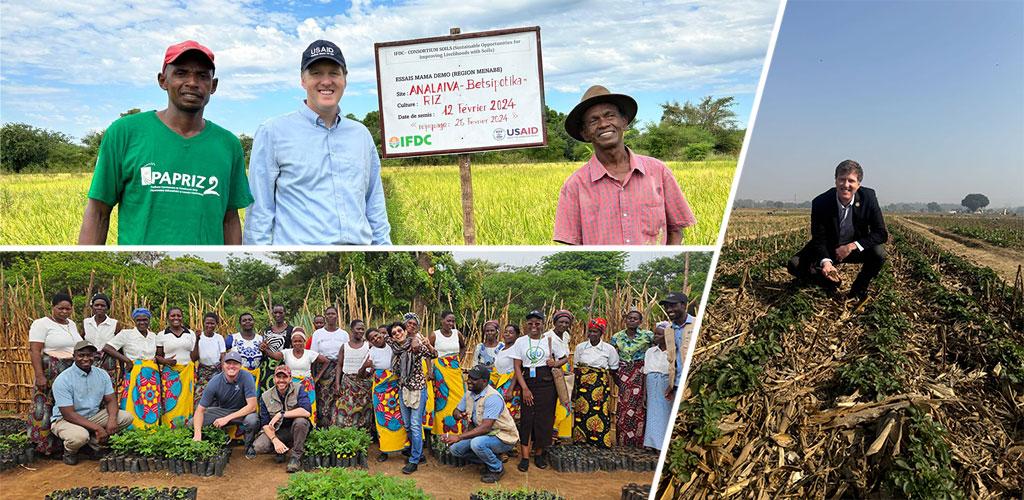
It’s not just thinking about the best scientific approach sitting here by myself in my lab. It is working with a large team of scientists, practitioners and farmers to identify technical solutions to best respond to specific global challenges.

By Rick Davis, BA’88
Zach Stewart, PhD, BS’11, has built his career from the ground up – literally.
The Creighton alumnus is vice president of research and chief scientist at the International Fertilizer Development Center (IFDC), an independent nonprofit organization dedicated to improving farm soils – and the lives of small farmers – worldwide.
“Soil is more than dirt; it’s life,” Stewart says.
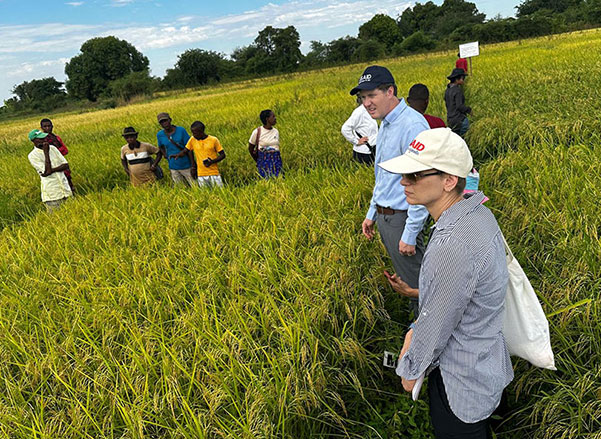
“Ninety-five percent of all the elements in our food come from the soil,” he continues, “and over half of all the food produced globally would not be present without fertilizer.”
Stewart was addressing a crowd gathered on Creighton’s Omaha campus during the fall semester to celebrate the 20th anniversary of Creighton’s Ferlic Summer Research Fellowship. Stewart was a Ferlic Fellow, himself.
“The Ferlic Fellowship, rooted in Creighton’s mission, didn’t just make me a better scientist,” he says. “It helped form me as a whole person – someone who sees science not as an end, but as a means to serve humanity.”
Stewart’s passion for science, agriculture and humanitarianism has taken him around the world.
“I’m traveling to some place globally about 12 to 15 times a year, on some type of weeklong trip,” he says.
The IFDC, which was established in 1974 and is headquartered in Muscle Shoals, Alabama, focuses heavily on sub-Saharan Africa and Asia and maintains a presence in 31 countries, with a team of scientists, agricultural experts, economists and other professionals worldwide.
It’s been quite a journey for an Iowa farm boy, Stewart says.
Farming Roots
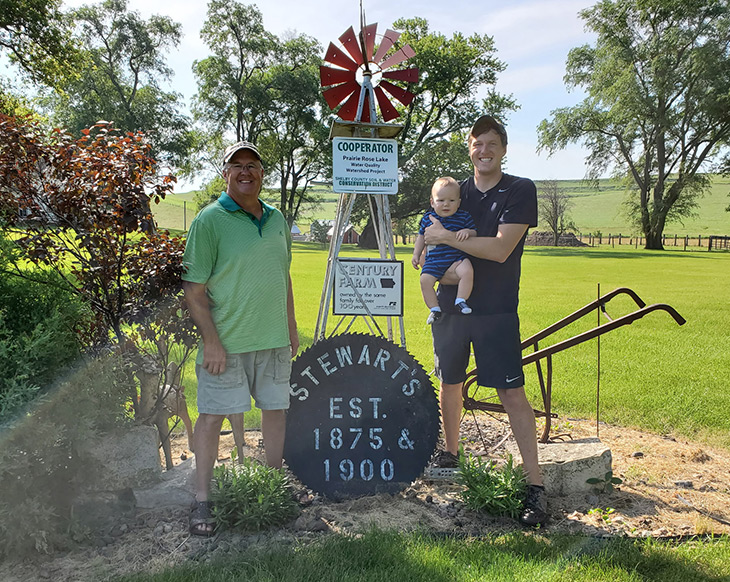
Stewart, who currently offices in Manhattan, Kansas, grew up on a family farm in Harlan, Iowa, about an hour’s drive from Creighton, where his family, like many other farmers in the Midwest, raised corn, soybeans and cattle.
“I was a farm boy who loved everything about agriculture, but I didn’t really see it as a career path,” he says. “I just thought, you know, this is a nice lifestyle but hard to make a career out of it.”
Stewart had a passion for science, and Creighton seemed like a good fit. It was academically rigorous, values-based and close to home.
“I could still get back to the farm and contribute and connect,” he says. His family’s roots run deep in Iowa. The farm was established in 1875, he says, by a couple of Stewart brothers who drove a team of mules from their home in Wisconsin to stake claim to the land.
Stewart was chosen for a Borlaug-Ruan International Internship during his senior year of high school. Established by the World Food Prize Foundation, the internship prepares students for high-impact careers in science, agriculture and global development. He traveled to Kenya, where he studied malaria in mosquitoes.
That led to an interest in biology at Creighton, where he was attracted to the entomology work of professors Ted Burk, DPhil, and Charles Brockhouse, PhD. With Brockhouse, Stewart studied Onchocerciasis, or river blindness, a parasitic disease transmitted through silk proteins of black flies.
“It was hands-on, molecular work that connected biology, chemistry and human health,” Stewart says. “That experience was transformative. It opened my eyes to the intersection of science and service, to research as a vocation rooted in both curiosity and compassion.
“It was the first time I truly understood that the same scientific curiosity I brought to insects on my family’s farm could also help tackle diseases that devastate communities halfway across the world.”
The Next Chapter
His work at Creighton led Stewart to seek a master’s degree in control of infectious diseases at the prestigious London School of Hygiene and Tropical Medicine, where he studied malaria vectors – mosquitoes – in the rice paddies of smallholder farmers in Tanzania.
“There, I saw firsthand how agriculture, environment and health are deeply intertwined,” he says.
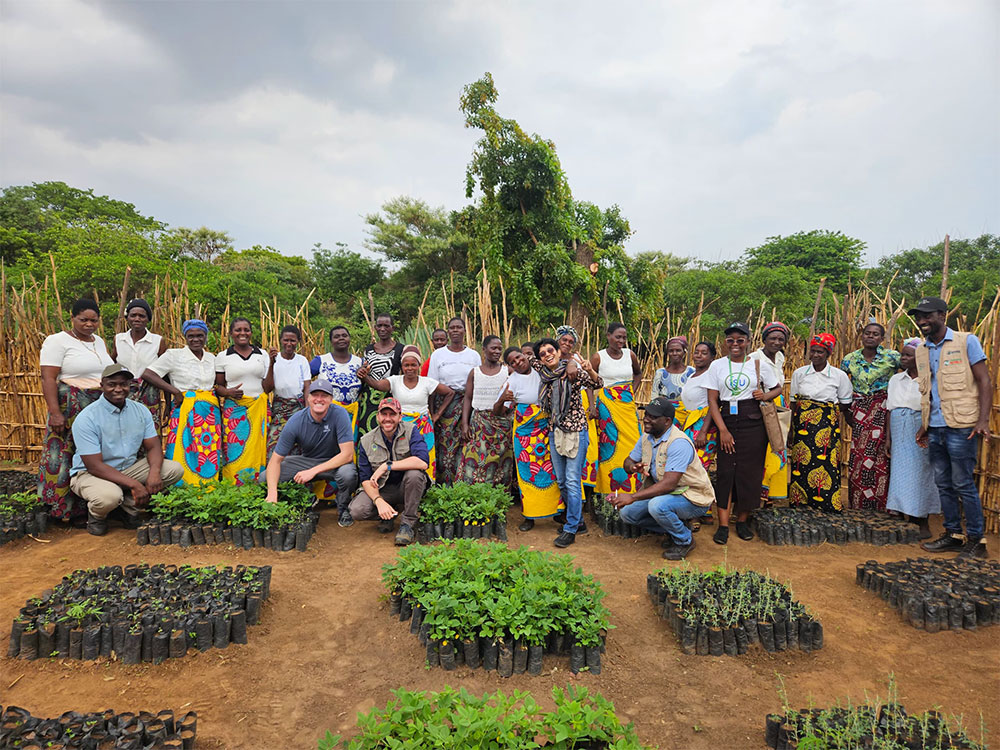
That was followed by a doctoral degree in soil science and crop physiology at the University of Nebraska and work as a research professor at Kansas State University and as a diplomat and senior technical advisor at U.S. Agency for International Development (USAID), managing global programs in sustainable intensification and soil fertility across sub-Saharan Africa and South Asia.
As chief scientist at IFDC, Stewart leads a global team of researchers working to improve smallholder agriculture as a driver of reduced poverty, hunger and malnutrition. A smallholder farm is considered about five acres or less, and, in most instances, the food produced not only is their livelihood, but it feeds their family.
“The conundrum is, while smallholder farmers produce about 50% of the world’s food, these farmers are also very food insecure,” Stewart says.
The IFDC works to lift these farmers out of poverty by providing them with crop development skills and the latest in fertilizer technology. The IFDC also promotes environmental sustainability and crop resilience, advancing ecological best practices and addressing natural disasters like severe droughts, which not only affect food production, but often leave small farmers without food or a livelihood and lead to population instability, migration and conflict.
“In addition, most farmers in sub-Saharan Africa are actually women,” Stewart says. “So, we must ensure that the technologies that are recommended or approached are gender appropriate.”
Full Circle
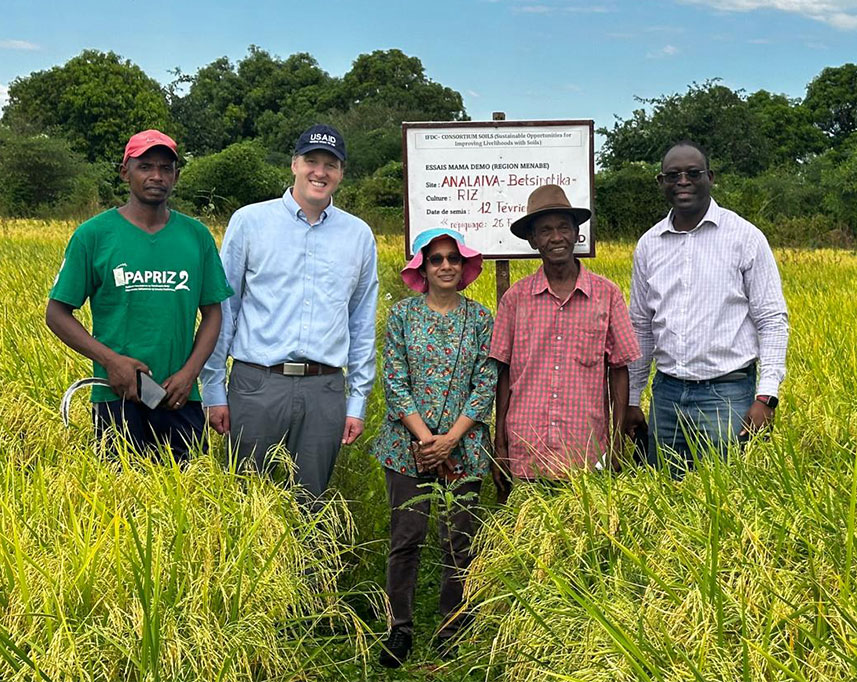
Stewart says his work has reinforced in him the importance of agriculture, not only at home in rural Iowa, but on the global stage and in so many aspects of our lives. And it’s about teamwork that extends beyond borders.
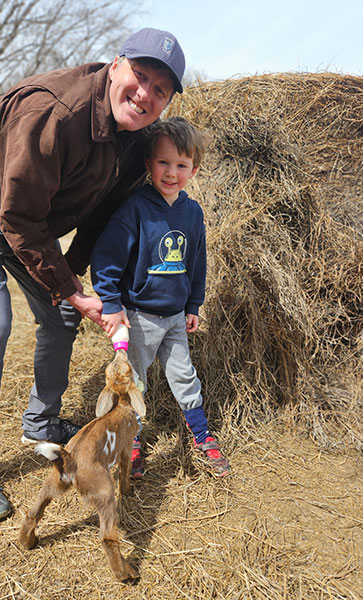
“It’s not just thinking about the best scientific approach sitting here by myself in my lab,” Stewart says. “It is working with a large team of scientists, practitioners and farmers to identify technical solutions to best respond to specific global challenges.”
And it’s about continued learning, which flows both ways.
“So, for example, when we develop new varieties of disease-resistant wheat in sub-Saharan Africa, we are also able to use that back in the United States,” he says.
While his dad is mostly retired from farming now, Stewart still enjoys returning to the family farm where he can jump in the combine with his children, gaze across the horizon and reflect on the importance of this work.
“When we strengthen soils, we strengthen lives. Healthy soils lead to healthy plants, which lead to healthy animals, which lead to healthy people — a ‘one health’ approach that connects everything … from the ground up.”