Featured Testimonial About Creighton University
Most career paths are defined by the decisions you make along the way. You can’t draw the map beforehand. You make certain decisions, certain left turns and certain right turns, and you wind up where you wind up.

By Micah Mertes
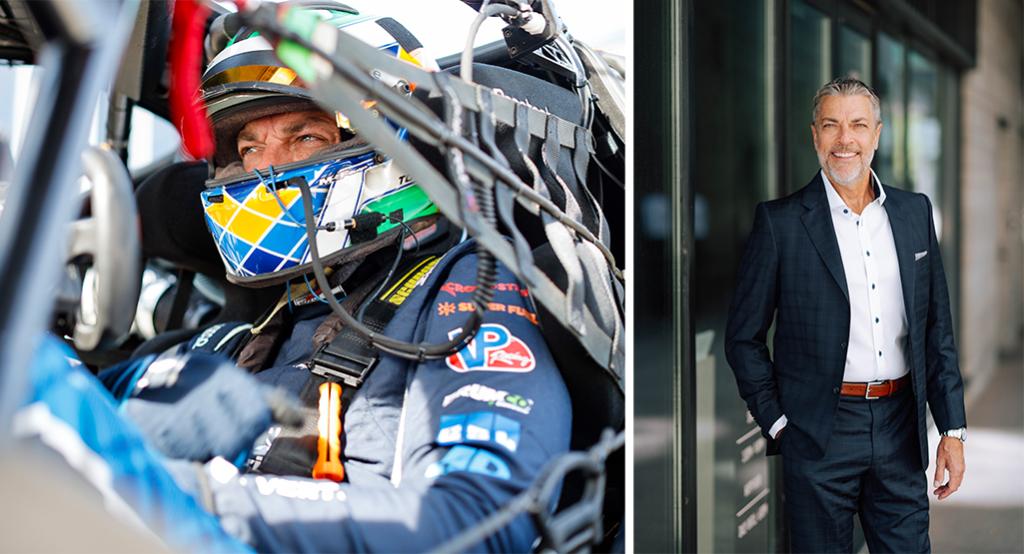
Driving a race car 190 miles per hour can teach you a lot about running your own business. Running your own business can teach you a lot about driving a race car 190 miles per hour.
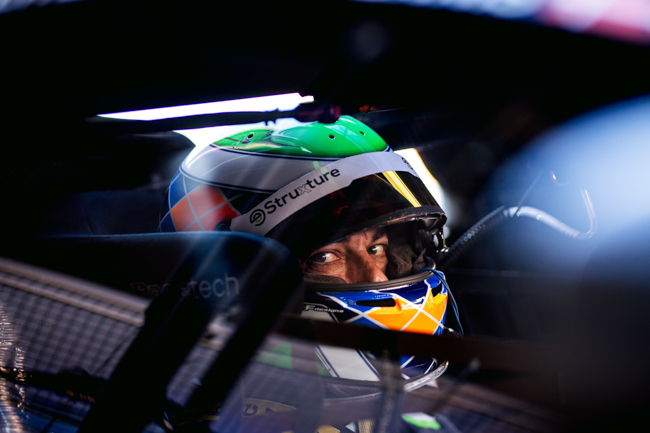
For alumnus Todd Coleman, JD’95, his “A job” (founder, chairman, president and CEO of Canada’s largest data center company, eStruxture Data Centers) and “B job” (a self-described “wannabe race car driver”) complement one another well. Both involve breakneck speeds and sharp turns, sound judgment and unwavering focus. Eyes on the road. Hands on the wheel. Don’t crash.
But in the first few laps of his career, Coleman was a Creighton-educated attorney. (He now refers to himself as a “recovering lawyer.”)
“Some people go into their career saying, ‘OK, this is my career,’ and they know what it’s going to be,” Coleman said. “But most career paths are defined by the decisions you make along the way. You can’t draw the map beforehand. You make certain decisions, certain left turns and certain right turns, and you wind up where you wind up.”
And, sometimes, you wind up on a racetrack.
A few sharp turns
After earning his undergraduate degree in information technology — and promptly learning that he didn’t want to be a software engineer — Coleman decided to go to law school. The small-town Illinois native chose Creighton because it offered both a scholarship and a community that made a lasting impression
“I had an outstanding experience in the School of Law and at Creighton in general,” Coleman said. “I made a few lifelong friends and spent way too much time at Barrett's Barleycorn Pub & Grill. I fell in love with the community — the Creighton community, but also Omaha. It’s an amazing city that truly invests in itself.”
Upon graduating, Coleman worked at the Omaha-based practice Fraser Stryker, where his (at the time rare) intersection of expertise in law and tech made him the go-to attorney for software license agreements.
Coleman only set foot in a courtroom a handful of times during his decade as a lawyer. His work was entirely in transactional law: mergers and acquisitions, commercial transactions, etc.
“Like many transactional lawyers, I believed I could run a business as well as a lot of the clients I was serving,” Coleman said. “I got the opportunity to put my money where my mouth is.”
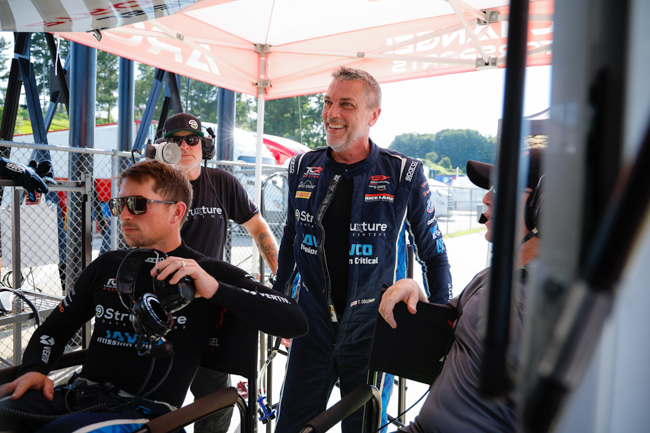
After letting his law license lapse, Coleman spent several years as an executive for the telecom company Level 3 Communications. In 2010, he co-founded his first data center company (Cologix, Inc.) in the Denver area. Coleman and his team sold Cologix in 2017, and the same year, he launched eStruxture Data Centers, which quickly became the largest data center company in Canada.
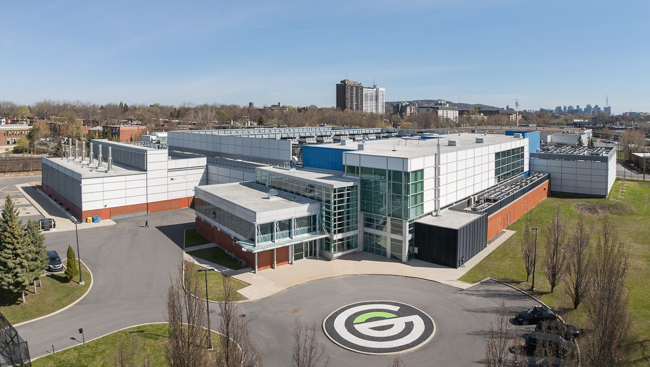
eStruxture now has hundreds of employees and 14 data centers across Canada, with two more in development. The company is in Canada because Coleman, who is based in Florida and Colorado, saw an opportunity there after building relationships in various Canadian markets through his earlier work.
Amid the data center sector’s historic cloud- and AI-driven growth, eStruxture is an advocate for sustainability. Coleman believes in responsible growth and sees water conservation in particular as a critical issue for the industry.
“Data centers do not have to consume a lot of water,” Coleman said. “Today, the only water our facilities consume is for toilets, sinks and a bit of humidification.”
eStruxture uses both air-cooling and closed-loop liquid cooling systems. The latter recirculate a glycol-coolant mixture through the same loop repeatedly. Every responsible data center operator, Coleman said, should be focused on sustainability in the broadest sense: using resources efficiently and being good long-term partners to the communities in which they operate.
The gift of presence
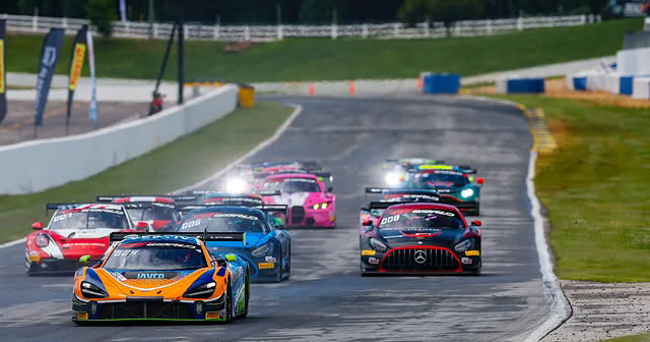
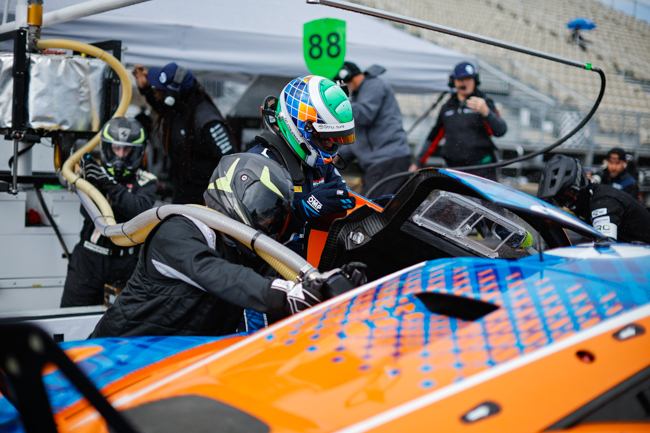
When Coleman isn’t running the company or spending time with his family, he’s often at the racetrack. Though he’s been racing for seven years — competing in dozens of racing weekends every year — Coleman remains reluctant to call himself a “race car driver.”
“I probably am a race car driver at this point, but I still prefer to describe myself as a ‘wanna-be’ race car driver.” (Learn more about his racing here and here.)
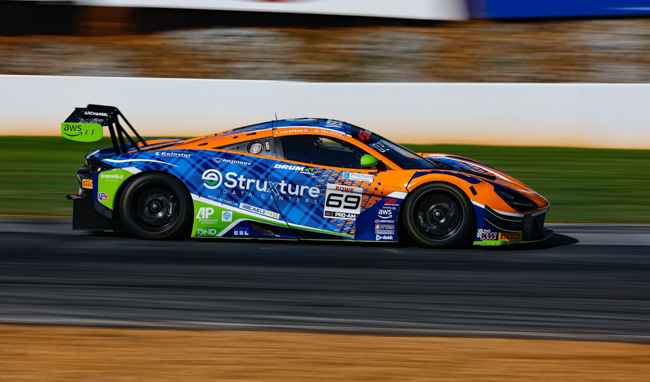
Coleman started racing while celebrating his 50th birthday with a driving course. Within six months, he was competing at Daytona International Speedway.
Fast forward seven years, and Coleman has raced in over 100 races across the U.S., Canada, Europe and the Middle East.
“When I look back on this journey,” Coleman said, “I see that I’ve learned a lot of great life lessons from my racing career. The biggest one is the gift of presence.
“When you’re a race car driver, if you’re not present, bad things happen. You’ve got to pop all those thought bubbles and be present. I can say now that I wasn’t as present as I should have been, and I’m trying to make up for that now. I appreciate my surroundings more. I encourage everyone to make sure to slow down sometimes and be there for every moment.”
Otherwise, life might pass you right by.