Featured Testimonial About Creighton University
This experience reinforced that meaningful development looks different for every individual and family, and our role is to support the path that works best for them.
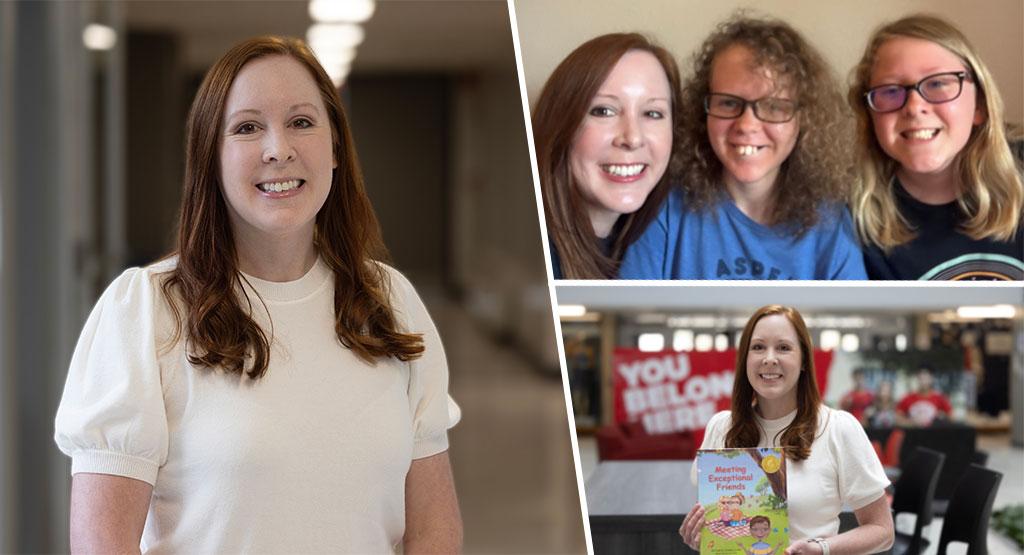
The contributions of Lindsey Larsen, OTD’07, to the field of occupational therapy are vast, but a few words capture the purpose that connects them all: empowerment, education and advocacy.
As an author, educator, clinician, consultant and mother to an autistic and disabled daughter, Larsen has the perspective to see and share disability through the lens of the individual. In every role, she works to create understanding and spaces where individuals can thrive.
Her journey began in high school while shadowing therapists in a clinic. In a single day, she watched an OT provide lymphedema therapy, create a dynamic splint for someone recovering from a tendon repair and work with a child on sensory regulation. The range of practice made a lasting impression.
“I’ve always had a passion for learning, and I realized then that occupational therapy would offer constant opportunities for growth,” Larsen says.
A Foundation for Growth
That growth has taken many forms throughout Larsen’s life, beginning with her own education.
As a student in Creighton’s occupational therapy program, she was drawn to the University's welcoming atmosphere and reputation as the nation’s first entry-level occupational therapy doctoral program. She saw a profession that was evolving, and a university leading that evolution.
“It was clear that Creighton was committed to advancing the field, and I wanted to be part of a program that was forward-thinking and continually evolving,” she says.
It was at Creighton when Larsen was introduced to the Jesuit value of cura personalis, or care for the whole person. While the concept formed her as a student and clinician, its meaning deepened years later through her experience as a parent.
Empowering Individual Journeys
The birth of Larsen’s daughter transformed the way she understood support and inclusion for members of the autistic and disability communities.
“Navigating life with an autistic and disabled daughter shed light on the many barriers individuals face daily, and these barriers often go unnoticed by most,” she says.
One of the clearest examples came as her daughter learned to communicate. Although she did not speak her first words until age three, she began using sign language at just 12 months old. Larsen and her family intentionally sought early childhood educators who would support her use of American Sign Language and continue building on her strengths.
“This experience reinforced that meaningful development looks different for every individual and family, and our role is to support the path that works best for them,” she says.
As a consultant for healthcare professionals and early childhood educators, Larsen takes inspiration from experiences like this, encouraging others to consider the full context of a person's life. As an instructor, she helps undergraduate and future professionals see disability through a more complete and human-centered lens.
Teaching Through Experience
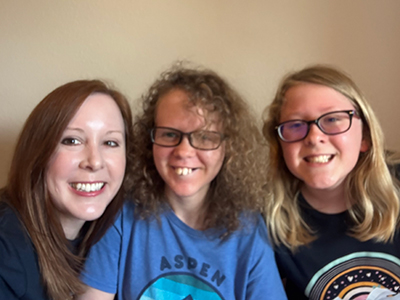
Today, Larsen serves as an instructor at Northern Illinois University, teaching undergraduate and occupational therapy students about disability and empowerment.
She brings disability studies to life through clinical experiences with individuals and families, excerpts from memoirs and interviews, and guest speakers. Her goal is to help students understand disability as a lived experience.
“Real-life examples are a powerful tool in helping students understand the complexities of disability,” Larsen says.
By exposing students to diverse perspectives, Larsen helps them recognize how disability identity can influence all aspects of a person’s life. These stories, she says, reveal nuances that cannot be fully captured through coursework alone.
Advocating for Inclusivity
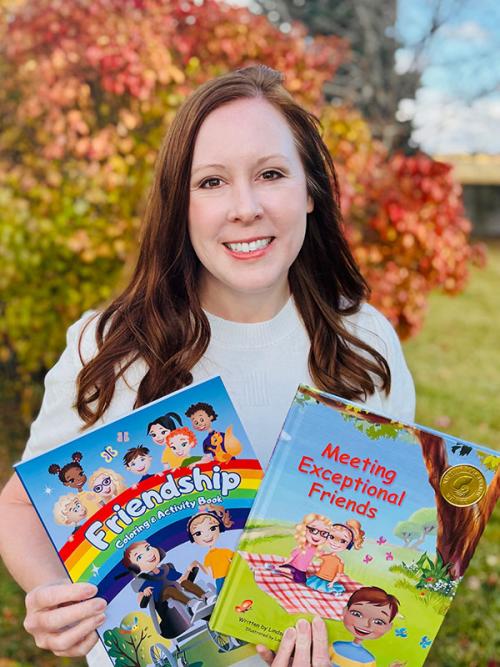
Larsen’s experiences as a mother, along with conversations with other caregivers, inspired her to write a children's book, “Meeting Exceptional Friends,” focused on disability awareness and inclusion. She noticed that while adults often seemed unsure how to interact with her family in public, children responded with curiosity and openness.
“When children are given clear, honest information about disabilities, they are usually very accepting and quickly move on to engaging and playing with their new friends,” Larsen says.
The book became a way to help children and parents approach disability with understanding rather than uncertainty. It reflects Larsen’s belief that advocacy is not only about changing policies but also about changing perceptions.
That same belief led her to become the volunteer director of Disability Book Week (DBW), an annual awareness initiative. The volunteer-led organization promotes books that feature positive and accurate disability representation and helps connect families, schools and libraries with inclusive reading materials. Through the work of sensitivity readers and advocates, Disability Book Week continues to expand access to stories that foster understanding and belonging.
A Shared Responsibility
Whether she is teaching students, consulting with professionals, writing books or raising her daughter, Larsen's work is rooted in a common purpose: helping people see disability through a more informed, inclusive and compassionate lens.
“The common purpose of all these roles is to foster growth in myself and others,” she says.
For Larsen, that growth begins with understanding. When disability is recognized as an important part of a person's identity—and when society acknowledges its role in creating accessible and inclusive environments—we move closer to a world where everyone has the opportunity to contribute and belong.
* * *
This interview uses identity-first language (e.g., “autistic person”) in recognition of the preferences expressed by many members of the autistic and disability communities. Language preferences are personal and may vary.