Featured Testimonial About Creighton University
Magis, the pursuit of excellence, challenged us to continually ask how we could move the College of Nursing to the next level.
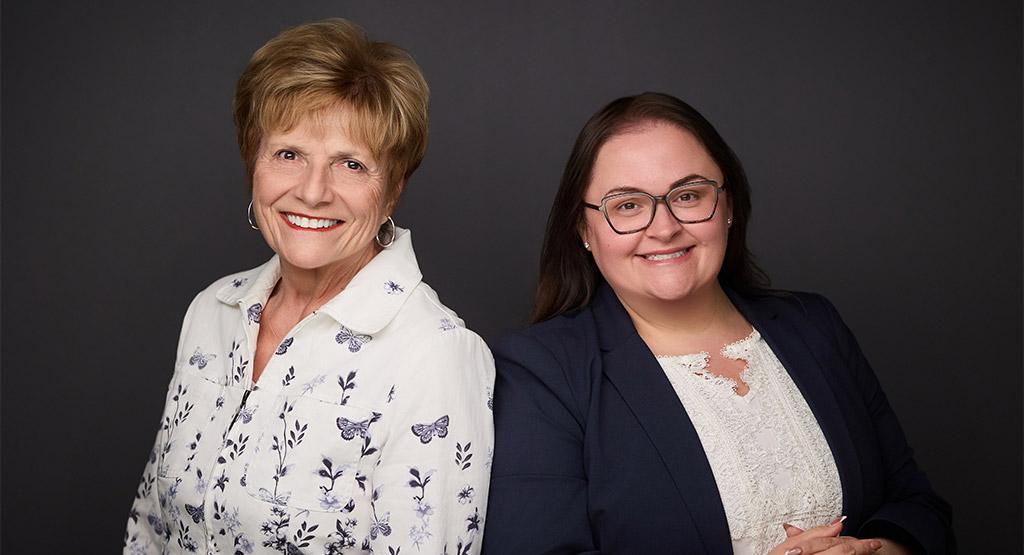
During Dean Emerita of Nursing Catherine Todero’s, PhD, RN, tenure as dean from 2015-2023, she helped guide the College of Nursing through a transformative period marked by healthcare workforce shortages, increasing need for competency-based education, expansion into Phoenix, growing graduate education demand and a strong emphasis on interdisciplinary healthcare training. Her leadership left the college larger, more research-oriented and more nationally connected than when she arrived.
Dean Jessica Clark, DNP, RN, also a forward-thinking leader, has carried on this legacy of nursing excellence and innovation. Since becoming dean in 2024, she has helped advance several major priorities for the College of Nursing, particularly around program growth, student support and workforce development.
As the College of Nursing looks toward a future of continued growth and impact, it also reflects on the leadership that helped shape its foundation. In this conversation, Dean Clark sits down with Dean Emeritus Todero to discuss the evolution of nursing education, the values that continue to define Creighton nurses and the opportunities ahead for the next generation of healthcare leaders.
The following conversation has been edited for length and clarity.
Reflecting on Leadership and Legacy
Dean Clark: The College of Nursing experienced major growth during your tenure. When you reflect on your time as dean, what are you proudest of? What moments best captured the spirit of the College of Nursing during your leadership?
Dean Emerita Todero: I'm most proud of two things: investing in faculty development and helping launch the Phoenix campus.
When I arrived at Creighton, I saw faculty who were exceptional educators with innovative ideas, but their work wasn't always visible on a national stage. We made a deliberate investment in helping faculty grow as scholars, researchers and academic leaders. Over time, that work elevated the College of Nursing's reputation nationally through rankings, grants and leadership opportunities. Seeing Creighton selected as one of only 10 nursing schools to help develop national nursing competencies was a particularly proud moment.
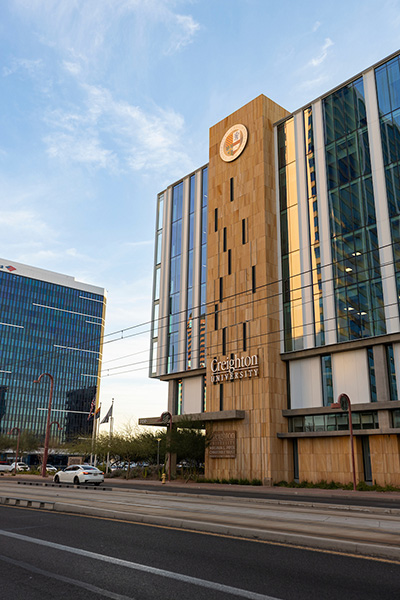
Launching the Phoenix campus was another defining accomplishment. It wasn't simply about opening a new location—it was about creating a visible, nationally recognized presence for Creighton in the Southwest and building an interdisciplinary health sciences campus designed for future growth.
The moment that best captured the spirit of the College of Nursing, however, came during the COVID-19 pandemic. Nursing faculty, students and colleagues across disciplines organized and operated vaccination clinics that ultimately vaccinated more than 40,000 people. It was an extraordinary example of service, collaboration and innovation. Nursing led the effort, but the entire campus came together around a common purpose. That embodied what it means to be Creighton.
Dean Clark: How did you approach balancing innovation with Creighton’s Jesuit mission and traditions?
Dean Emerita Todero: The Jesuit values weren't separate from innovation—they were what drove it.
Magis, the pursuit of excellence, challenged us to continually ask how we could move the College of Nursing to the next level. At the same time, cura personalis reminded us that progress only happens through people and partnerships. Whether working with students, faculty, healthcare systems or community partners, relationships mattered.
The mission of forming men and women for and with others was also central to our work. Service, collaboration and a commitment to improving healthcare outcomes guided many of our decisions and initiatives.
The Students Who Shape the Work
Dean Clark: What have students taught you throughout your career?
Dean Emerita Todero: Students taught me that standards should remain high, but pathways to achieving those standards can look different for different people.
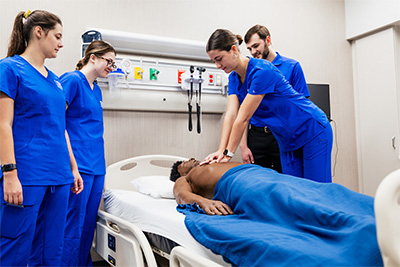
As educators, our responsibility is not to lower expectations but to help students find ways to meet them. Sometimes that means offering alternative strategies, additional support or simply a second chance. Throughout my career, I've seen students who struggled early go on to become exceptional nurses and leaders in their organizations.
One of the most important lessons students taught me is that potential should never be underestimated.
Dean Clark: What do today’s nursing students need most from educators and mentors?
Dean Emerita Todero: Today's nurses need two things above all: a strong foundation of knowledge and the ability to think critically.
Technology and artificial intelligence can provide information quickly, but they cannot replace clinical judgment. Nurses must be able to analyze situations, question assumptions and consider multiple possibilities before making decisions.
The role of educators is to help students develop both deep expertise and intellectual curiosity so they can navigate increasingly complex healthcare environments with confidence.
Expanding Access to Healthcare
Dean Clark: Looking back, what stands out to you as the most defining early moment of the Phoenix campus expansion?
Dean Emerita Todero: The decision to establish a visible, permanent presence in Phoenix was the defining moment.
Creighton already had students completing clinical experiences in Arizona, but the University wasn't widely known in the community. We wanted something different—a campus that would serve as a destination and a visible symbol of Creighton's commitment to healthcare education in the region.
Seeing community leaders, healthcare executives and civic officials rally around the grand opening reinforced that we had created something meaningful not only for Creighton but for Phoenix itself.
Dean Clark: What did the Phoenix expansion teach you about scaling nursing education in a rapidly changing healthcare environment?
Dean Emerita Todero: It reinforced that growth depends on partnerships and resources.
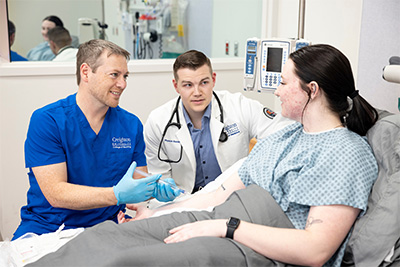
Nursing education cannot expand without high-quality clinical experiences, which means healthcare partners must be fully committed to supporting students and programs. Recruiting faculty was another challenge, especially in a region already experiencing workforce shortages and intense competition for clinical instructors.
Scaling successfully required strong relationships, flexibility and a willingness to invest in the people and partnerships that make nursing education possible.
Dean Clark: The 3+1 pathway, offered through the Accelerated Bachelor’s in Nursing program, creates opportunities for students in rural communities while helping meet local workforce needs. What have you learned from the success of that model, and what does it tell us about the future of filling nursing shortages?
Dean Emerita Todero: The success of the 3+1 model shows that collaboration is essential to solving workforce shortages.
The model allows students to stay connected to their local communities while gaining access to a Creighton nursing education. It also helps partner institutions offer nursing opportunities without building an entire nursing program from scratch.
Most importantly, it demonstrates that solutions to workforce shortages don't have to be competitive. When institutions work together creatively, students, universities and communities all benefit.
Building a Culture of Inquiry: The FIRE Center
Dean Clark: What gap or need led you to create the Faculty Innovation, Research and Education (FIRE) Center, and what problem were you most determined to solve? How did FIRE change the culture of research and scholarship within the College of Nursing?
Dean Emerita Todero: The FIRE Center was created because faculty had great ideas but often lacked the time and resources to pursue them.
Some projects had the potential to become nationally funded research programs, while others focused on innovative teaching and practice improvements that might never attract traditional grant funding but still had tremendous value.
FIRE provided protected time, mentoring and resources, such as grant writing and statistical support, so faculty could develop those ideas and move them forward. Just as importantly, it created a culture where scholarship and innovation became expected and celebrated.
The success of faculty who later earned national recognition demonstrated what was possible when talented educators were given the support they needed to thrive.
Looking Ahead
Dean Clark: What excites you most about the future of the College of Nursing?
Dean Emerita Todero: I'm excited by the momentum the college continues to build.
During my tenure, I built a strong foundation, and the future focus can be on growth rather than rebuilding. I see continued opportunities in undergraduate education, faculty scholarship and workforce development.
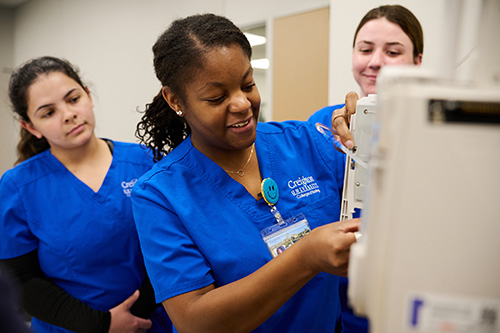
The key will be maintaining the high-quality clinical experiences that have always defined a Creighton nurse. If those partnerships remain strong, the College of Nursing is well positioned to continue leading and innovating in nursing education for years to come.