Featured Testimonial About Creighton University
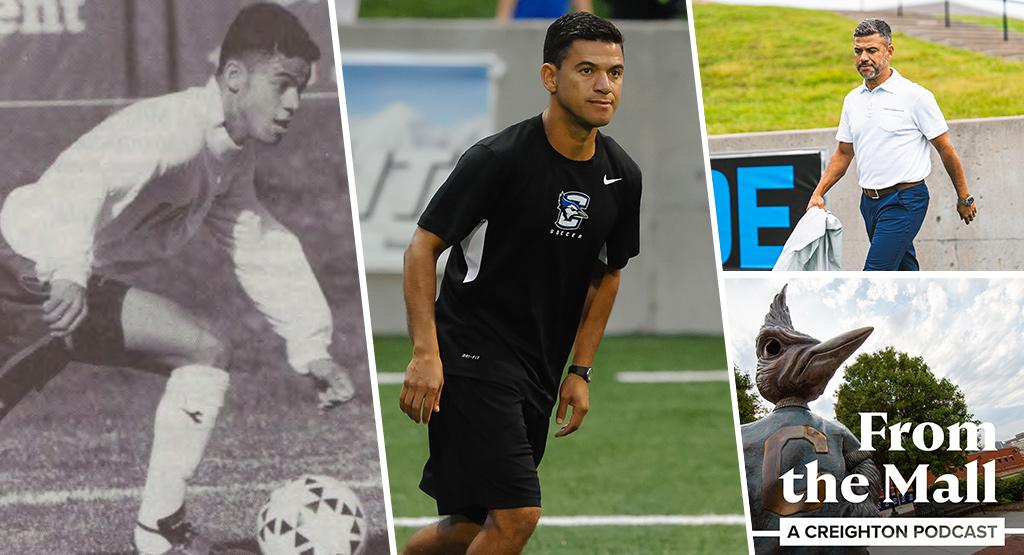
Ten years after leaving school to play professional soccer, Johnny Torres returned to Creighton’s campus to complete his social work degree. He never planned to coach.
But there was an open volunteer gig on Creighton’s soccer staff. So, when Torres wasn’t attending class, he made a point to stop by practice.
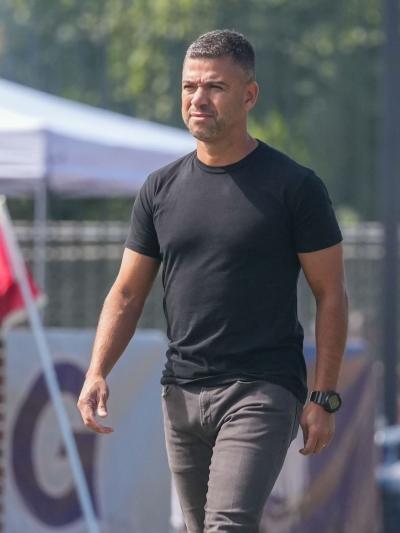
Working with the student-athletes? It soon became the highlight of his day.
“I realized it then,” Torres said. “I said, ‘Man, I want to do this.’ I had so much fun being able to (coach), and I thought I could see myself doing that. That’s where I got the idea. And I was like, ‘All right, I don't need to go anywhere else.’”
On a recent From the Mall episode, Torres discussed his appreciation for the relationships he made and the life lessons he learned during his time as a Creighton student-athlete, when he was a two-time National Player of the Year.
Torres also talked about how his incredible journey (born in Colombia and adopted at age 9) influences his approach and philosophy now that he’s in his eighth year as the Bluejay men’s soccer coach. His 2026 team is off to a strong start this season.
Below is a snippet of the podcast conversation. The questions and answers have been edited for space and clarity.
* * *
Your goal was to be a pro soccer player. But you experienced a shift at Creighton. How does that happen? How did you reframe what your goals were and who you wanted to be?
Back then, me wanting to be a pro soccer player was more of a dream, something that I really couldn't see or grasp. I just knew it was out in the distance, and it was something that I wanted to do.
When I came to Creighton on my first visit, I realized that I could still have that dream. But there was so much more to life. The players seemed like they were larger than life. They were great role models. And I thought to myself, “OK, there's more to me than just the dream of wanting to be a professional soccer player.”
I was able to see that in those guys. I was blown away on my visit. I did take four other visits and not to disrespect in any way the other visits that I took, but no other team had the impression that that group had on me on my visit.
One note is that you earned an award for how much community service you did as a student-athlete. You were in the community. Did that happen right away? Or maybe that was just a result of your teammates leading the way?
For sure. The amount of happiness and gratitude that group showed when they were doing community outreach was infectious. Paired with the fact that I was born in Colombia into a pretty poor family. We didn't have much. It was my parents, my younger brother, my older sister and myself. We all slept in the same bed. It was a one-room apartment — not one bedroom — but a one-room apartment.
Seeing how these guys at Creighton were able to give back to the community, paired with the humble beginnings that I came from, made it very easy for me to want to give back and to help out in our community. And so, to this day, it's something that I hold very dear. It's something that I try to instill in our guys that come through our program.
The NCAA mandates that you do … I think it's 10 hours a semester of community service. That's crazy. That's nothing. We don't see it as a mandate. We see it as our responsibility. We are privileged, and it's our right and our responsibility to be able to give back to our community.
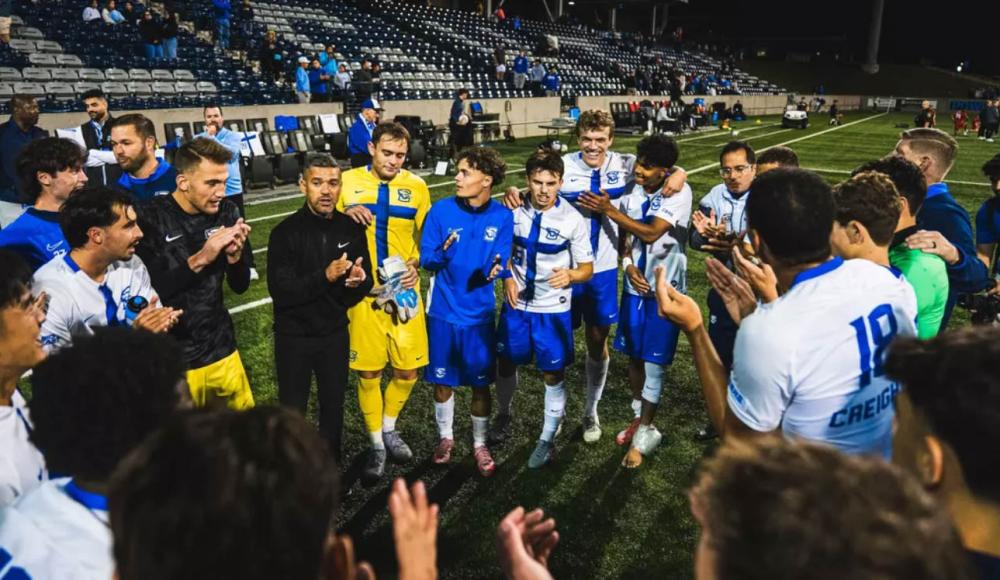
You mentioned your humble beginnings. You experienced things that maybe as a kid you probably don't fully understand, but they left little imprints on you. How do you think that has shaped who you are now and the way that you look at the world and approach this job?
I was adopted at 9. When it happened, I was a kid. So, I try to think back to how I've envisioned it before it happened. I thought, “Oh, this is going to be great. This is going to be like a slumber party.”
The couple was Marcela and Carlos Clark, who are from Chile. They adopted me. Carlos was my soccer coach. They had their own son, Carlos Jr., who was the same age. We were on the same soccer team. I was pumped when this was going down. But pretty quickly in about a two- or three-week span, I realized, “Whoa, this is crazy.” I missed my biological family, my sister, my brother, my parents. But I'll tell you what, I hit the lottery being adopted by Carlos and Marcela, they shaped me into who I've become.
I've always thought that was my second chance at life because had I gone back to Colombia, man, who knows? I always stop to think about what I would've done in Colombia. I don't know, maybe a mechanic? I don't know.
To think of where I've ended up, it's a blessing. I find myself thanking my lucky stars for what transpired because I think life would've been very different. But I can go back now as an adult to think of some of the things that were instilled in me through my adoptive family that have made me a different person.
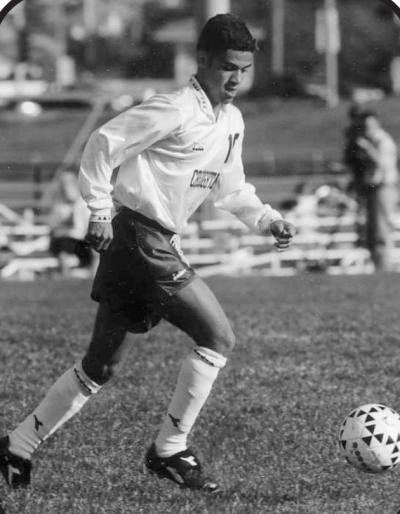
There was a newspaper article published during your Creighton playing days. It said you were 5-foot-8, 135 pounds. The only way opponents could stop you was just to be super physical. They’d shove you and push you. Whatever they could within the rules, and maybe bend the rules to slow you down. Is that an accurate sort of depiction of what you remember from your playing days?
I was 5-6, 120 pounds when I arrived at Creighton. When I left Creighton, I was 5-6, 145.
Okay, so they gave you a couple inches there.
Which is good. I appreciate that. At the end of the day, for me, being a smaller player was always part of my life. I did get a lot of people to tell me that I wouldn't be able to play because I was too small, and I always had joy in showing them that I could play. But I think very quickly I understood what my strength was. I would say my strength was speed.
I was always looking for spaces in behind (defenders). I was pushing the ball and running and trying to use my speed to be successful. And so that's what I did throughout my club career. That's what I did throughout my college career, and that's what I did in my professional career. I was just trying to use my speed and trying to outwit and be smarter than the defenders.
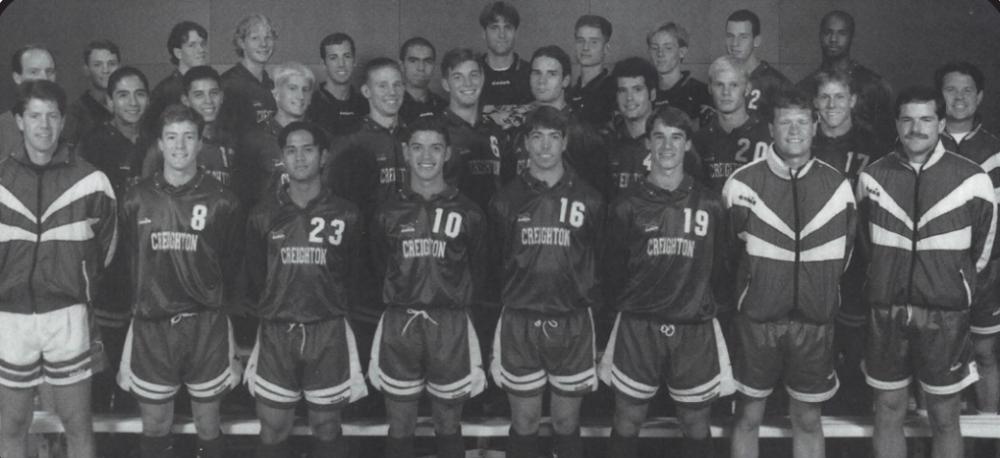
Creighton has a vault of games. Its classic games for all its Athletics programs. And one of them was the Fresno State game in 1996. You scored two goals.
That was our run to the Cup.
That’s right. You were on Creighton’s first team to reach the College Cup, soccer’s final four. … The second goal you had against Fresno State, you kind of weaved through the defense a little bit. And on the video, you can hear somebody say, "No way," as you're kicking it into the goal. (Check out the goal)
Actually, that goalie became a teammate of mine in the pros, and he would always talk about that goal.
Did he? Yeah, you were surrounded. But you just made this one move that kind of gave you enough space to shed a defender, and then you had that little space where you could kick it through.
I have to give props to one of my former teammates, Thomas Martin from Clovis, New Mexico, who's to this day one of my best friends. We always talk about the amount of time that he played or didn't play — but what a tremendous assist he had in that match.
* * *
Listen to more From the Mall.