Featured Testimonial About Creighton University
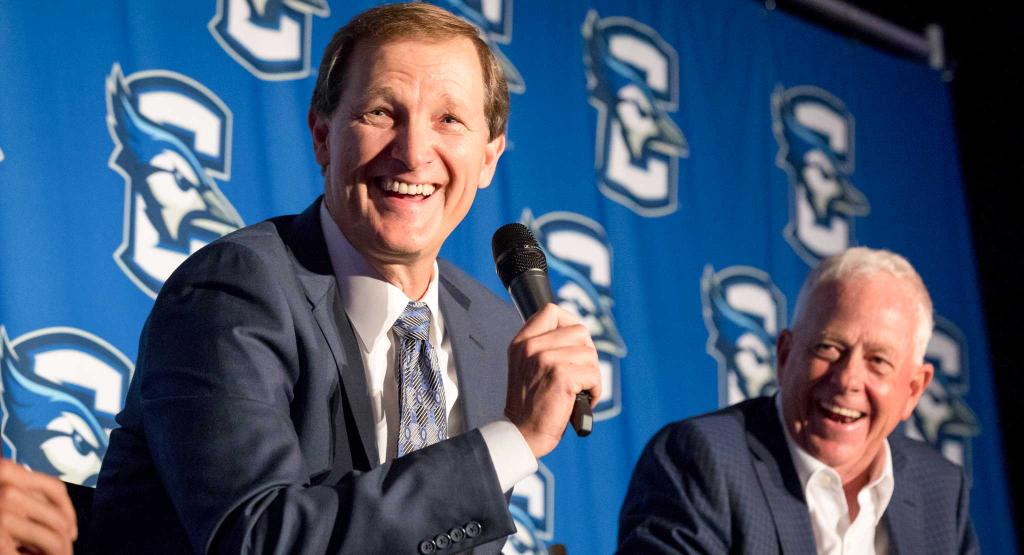
I'm not sure there was a better visual demonstration of the mission of Creighton than watching Dana Altman's teams play basketball.
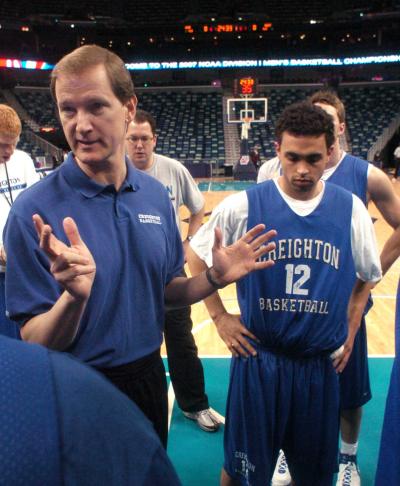
When Dana Altman agreed to become the Creighton men’s basketball coach in 1994, he revived the program and changed the course of Bluejay history. More than 30 years later, the man who hired the visionary coach still isn’t sure why Altman first said “yes.”
Altman announced his retirement from coaching on Wednesday, Oct. 7, after 16 seasons at Oregon (and 16 transformative years at Creighton before that), prompting countless tributes and shoutouts on the legendary coach’s legacy and impact on the sport.
>> Hear what Bluejay Coach Alan Huss had to say
Altman was especially integral during his time at Creighton, from 1994 to 2010.
But how, exactly, did former Creighton Athletic Director Bruce Rasmussen lure Altman to Omaha?
Rasmussen couldn’t help but chuckle about during an interview last week.
Consider the landscape in 1994, Rasmussen said. The Bluejays were coming off a 7-22 season, their third straight losing campaign. Altman led Kansas State to the 1993 NCAA Tournament and earned the Big Eight Conference’s 1993 Coach of the Year Award, before guiding the Wildcats to the NIT Tournament Final Four in 1994.
“The Big Eight had coaches like Johnny Orr, Norm Stewart, Billy Tubbs, Roy Williams, Eddie Sutton. Wow. And yet Dana was the Coach of the Year,” Rasmussen said. “To get him to come to Creighton was … well, I still don't know why he said ‘yes,’ but he did.”
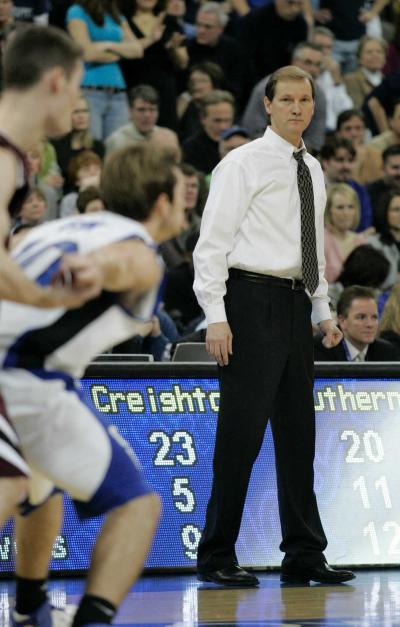
What happened next changed Bluejay Athletics forever.
Altman transformed Creighton into a perennial contender in the Missouri Valley Conference, galvanized support from campus and Omaha communities, and set the foundation for the program’s ascension on the national stage and into the BIG EAST Conference under coach Greg McDermott.
Before Altman, the Jays tallied nine NCAA tournament appearances in 50-plus years. Altman helped Creighton earn seven NCAA berths, including five straight from 1999-2003. His 327 wins were a program record until McDermott surpassed him in 2024.
“I don’t think we’d be in the BIG EAST without Dana, and I don’t think we’d be in the CHI Health Center without him,” Rasmussen said. “But what I most appreciate about Dana is that, yes, he’s a Hall of Fame coach. He’s a better person than a coach.
We asked Rasmussen, the Bluejay Athletic Director from 1994 to 2011, to reflect on Altman’s Creighton tenure — how the ‘90s Jays found success and what made Altman’s teams special. The conversation, edited for clarity, is below:
Building a winner again
Question: Coach Altman built the program in the 1990s, and you were right alongside him. What did you appreciate most about him during that process?
Bruce Rasmussen: "First of all, if he wouldn't have come to Creighton, I might have been the shortest-tenured AD in the history of Division I athletics."
Did you have a backup plan?
"Yes, but it obviously wasn't as good as getting Dana."
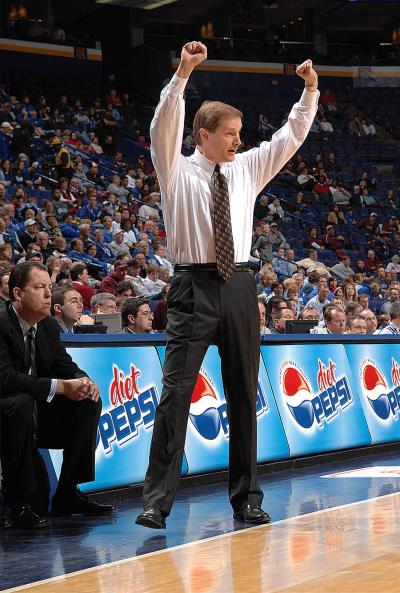
But the success here wasn’t immediate. Creighton didn’t have a winning record until Altman’s fourth year and didn’t reach the NCAA Tournament until a season after that.
"I knew what I was getting in Dana, but I didn't know to the extent that I later found out. I watched Dana from afar for a long time. While coaching Creighton women’s basketball, I helped place a girl at Moberly Junior College (Missouri) when Dana was coaching there (1983-1986). I watched him coach, and I watched his commitment to his kids and saw his intensity. Our coaching philosophies were a lot alike.
"And yes, I think those first couple years at Creighton, he was wondering why the heck he came here, and what kind of decision he made. But Dana was going to make it work because he was going to give everything he had."
You’re practicing in the Old Gym and playing in the Civic Auditorium. How often was Dana in your office saying, “Bruce, we need to upgrade our facilities?”
"Our offices were right next to each other. So, either I was in his office or he was in mine. Or we were hearing each other. This is embarrassing to say, but I spent more time with Dana in those early and mid ‘90s than I spent with anybody in my family. And he was the same.
"As we were trying to improve the program, and get the snowball rolling, we spent a lot of time figuring it out together. You have to balance what you need with what you can get. There was always a tension of opposites. What we needed, we knew we couldn't get.
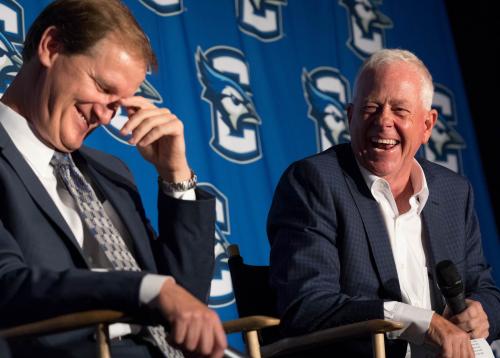
"There's an old African proverb that says, 'How did the ants eat the elephant? … One bite at a time.'
"Instead of trying to get everything, we took small steps. Let's renovate the Old Gym. Let's add a coaching staff member. Let's add a little to our budget. You tried to do it a bite at a time. And then you look back over a period of time and you've moved forward. You don't necessarily realize where you've been.
"And that's Dana. He will work and work and work … and he will work. One of the things I always appreciated was that he never said to me, 'This is what I had at K-State. This is what I need to have at Creighton.' He was always thinking about what we have and how we can work with it.
"The team ate at McDonald's on road trips, or he’d tell them to go get a chicken sandwich at Burger King. I mean, Dana would drive to Kansas City to fly on a recruiting trip rather than pay an extra 50 bucks to fly out of Omaha. He took what we had and did the best job he could with it."
Altman's teams embodied the Creighton mission
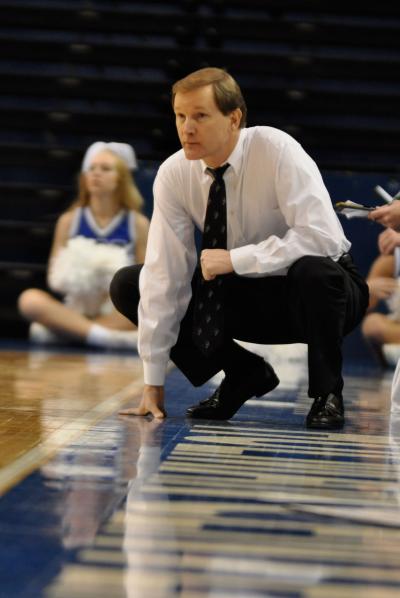
Question: Were there moments that turned the tide for Creighton in the ‘90s? Were there specific wins or was it just this cumulative effort that eventually led to a breakthrough?
Bruce Rasmussen: "It's probably better to ask Dana that question. A lot of it was hard work. A lot it was high character. A lot of it was Creighton. Some of it was luck, although Dana had a great eye for talent.
"In practice, Dana's goal was this: Every time we're on offense, we score. And every time we're on defense, we stop them.
"But it wasn't as important that you reach your goal as what happened in your attempt to reach your goal. In your attempt, you must demonstrate a love for what you're doing and who you're doing it with.
"When Dana came to Creighton, we had maybe 1,500 or 2,000 people coming to a game. But before we started making NCAA Tournaments, our attendance went up. I think some of it, and maybe a lot of it, was that you could tell when you watched our team play that they loved what they were doing and they loved who they were doing it with.
"If I had to give the mission statement of Creighton in my own words, I would say Creighton shapes students into people who demonstrate a love for what they are doing and who they’re doing it with. They become people who recognize that everybody is important. They become people who are willing to play a role for the betterment of the group. And they’re committed not to improve the condition of one, but to improve the condition of all. That's a great mission.
"I'm not sure there was a better visual demonstration of the mission of Creighton than watching Dana Altman's teams play basketball. Whether people consciously thought that or not, subconsciously it was there."
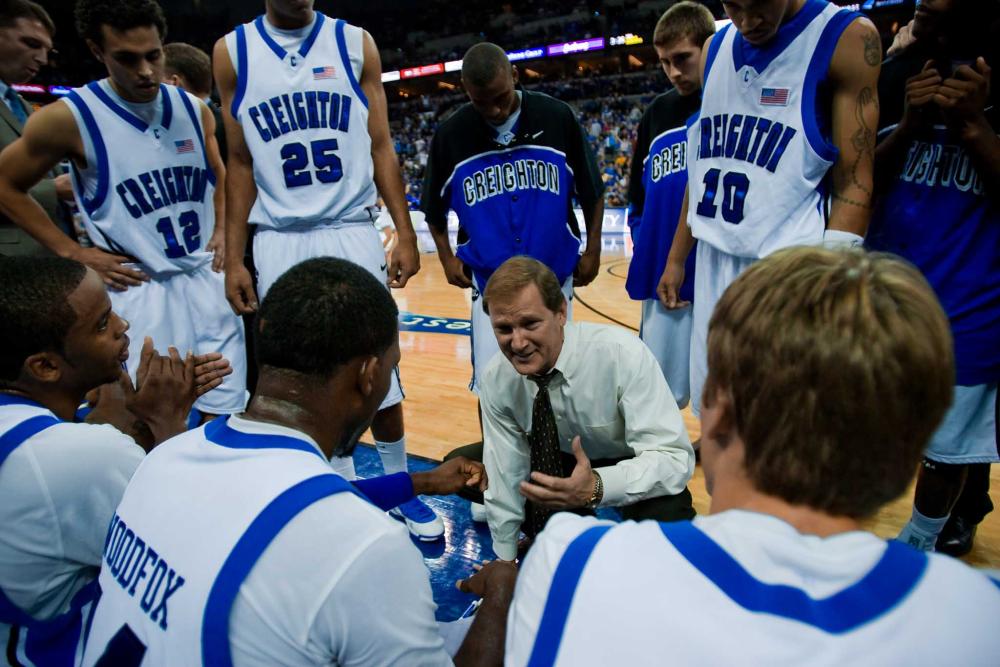
Looking back, it does seem that Coach Altman really was the perfect fit for Creighton.
"Dana's very servant oriented. Student-athletes were not there to serve him. He's there to serve them. He's there to make them as good as they can be. And he will change what he does to take advantage of their strengths.
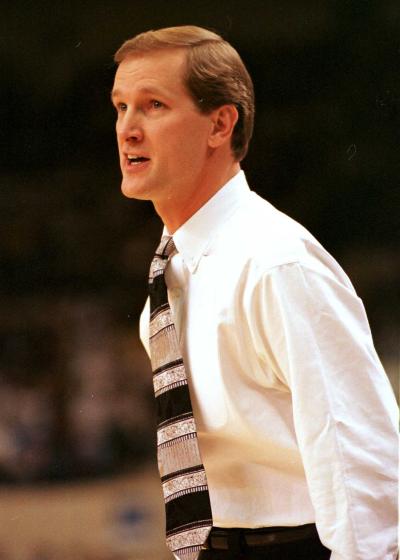
"Those student-athletes knew that he was all in. They knew that he would do whatever he could to help them. They knew that he held them to high standards. But if all you're doing is trying to coach kids to be better individually and as a part of a team, then you’re missing the purpose of athletics at the college level.
"What should happen as a part of the process is that there’s an intentionality to it. Student-athletes grow and become better prepared to lead in their family, in their business and in their community. When you look at the product, you look at the kids that Dana coached at Creighton and you see what they're doing five years later, 10 years later, 20 years later, it makes you proud.
"It’s not just about the fact that we won games, but the fact that we could win games while we were still developing kids and teaching them lifelong lessons. And that's where Dana was great.
"But the other thing that I think isn't talked about enough with Dana is his love for Omaha. It’s an unbelievable community, and we couldn't have gotten it done at Creighton without a lot of people in Omaha buying in. People going beyond their jobs and families to make a commitment to Creighton. Dana said at his press conference that leaving Creighton was one of the two toughest decisions of his life. I know Dana has a love for Omaha and the people of Omaha, and especially some real key people who supported him and who continue to be lifelong friends."
No one wanted to play Altman's teams in March

Question: Do you have a favorite game during the Altman era?
Bruce Rasmussen: "Oh boy. I just remember walking out of the gym time after time, whether it was in Omaha or on the road and going, 'I don't know how we won that game, but we did.'
It seems like he was such a magician in March, too. In St. Louis, especially.
"His teams always got better as the year went on."
Altman won six Missouri Valley Tournament championships while at Creighton. His Oregon teams were 25-9 in the Pac-12 Tournament, earning four titles. He went 18-17 all-time in the Big Dance.
"If you were going to play him, you wanted to play him early. You didn't want to play him in February and March."
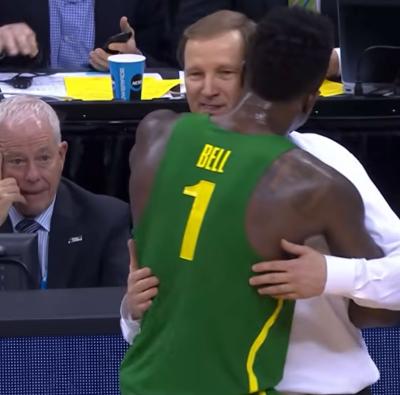
In 2017, I think there were Creighton folks that went down to Kansas City to support Altman and watch his Oregon team clinch a Final Four spot. His first Final Four.
"Yes. Not only that, but you know who handed him the regional trophy?"
Who was that?
"Me."
That was you?
"I was on the NCAA Division I men's basketball committee, and I oversaw the Kansas City Regional. When your team wins the regional, you cut down the nets and celebrate your Final Four berth. I handed Dana the regional trophy on the court.
That had to be special. Did you say anything to him?
"You don't need to say anything. It was very special for both of us."
* * *
Additional notes about Altman's coaching career
- Altman coached three Creighton players (Kyle Korver, Rodney Buford and Anthony Tolliver) who reached the NBA. Booker Woodfox, Nate Funk, Brody Deren, Ryan Sears, Korver, Buford and Tolliver were each first-team all-conference performers under Altman.
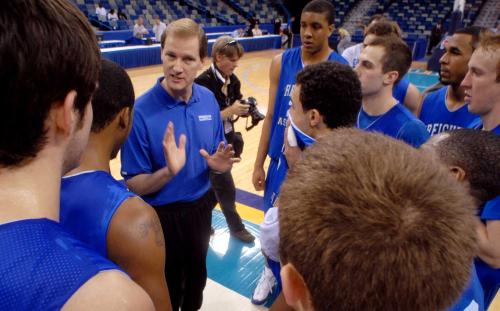
- Altman was inducted into the Creighton Athletics Hall of Fame in 2018.
- He left Creighton ranked third all-time in total wins while serving as a coach in the Missouri Valley Conference, trailing only Basketball Hall of Famers Henry Iba and Eddie Hickey. (Northern Iowa's Ben Jacobson recently passed Altman.)
- When the Jays entered the AP Top 25 in 2002, it was the first time since 1975 that a Creighton team was nationally ranked.
- Altman is the all-time winningest coach at Oregon with 382 wins.
- Oregon's 2017 Final Four appearance was the program's first in 78 years.
- Altman earned a Coach of the Year award in four different conferences. He was the National Coach of the Year in 2013.
- His overall coaching record in 37 seasons as a Division I head coach: 792-425 (.651). It's the 15th-most wins in NCAA history.